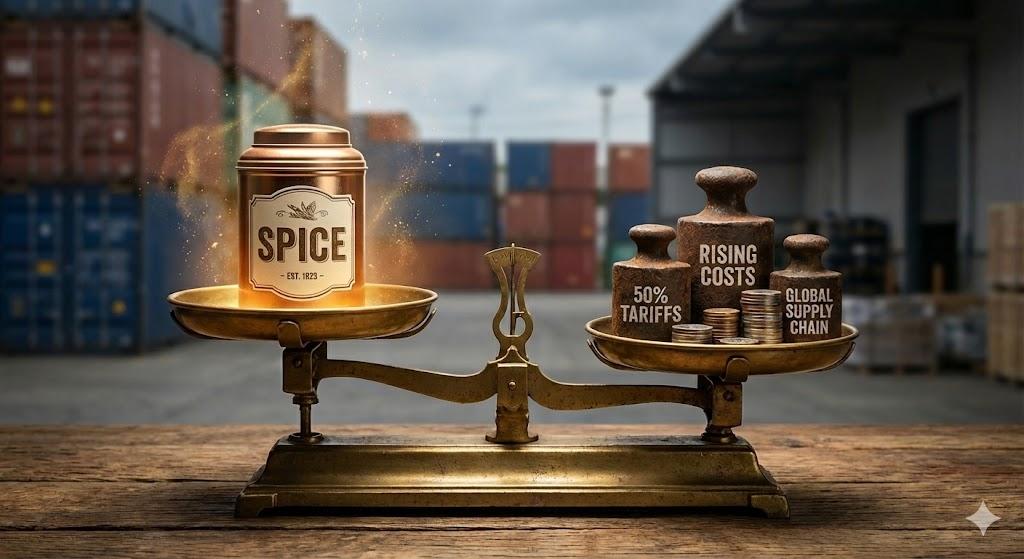
In the world of CPG, trends usually follow the path of least resistance—and lowest cost. But every so often, a consumer shift is strong enough to force brands to swim upstream. We are seeing a fascinating “clash of currents” in the packaging world right now involving Old Bay, Eat Happy Kitchen, and the global metal market.
Return of the “Clank”
Recent headlines confirm a distinct pivot toward heritage and tactility. Old Bay seasoning recently announced a move from plastic back to its original tin material. The goal? To revive the “classic feeling” and user experience that defined the brand for decades. Similarly, Eat Happy Kitchen has transitioned its spice blends from biodegradable canisters to vintage-inspired tins to create an “emotional link” with consumers, with founder and CEO Anna Vocino noting, “We’re not just selling spices, we’re selling a feeling.”
This aligns with 2025 retail trends identified by Placer.ai, which highlighted Millennials’ sense of nostalgia and demand for elevated experiences at affordable price points as key drivers for physical retail.
The Supply Chain Paradox
Here is where the dots usually fail to connect. While marketing teams are championing a return to premium metal, procurement teams are facing a nightmare scenario.
According to market reports, the US doubled tariffs on imported steel and aluminum to 50% in mid-2025. These costs are rippling through the global packaging supply chain. The pressure is so high that many producers are actively abandoning metal in favor of other substrates to protect margins, including giants like Coca-Cola.
The Strategic Synthesis
Why would spice brands voluntarily walk into a high-tariff storm?
- Differentiation is Survival: In a market flooded with generic options, the “premium feel” of tin creates a defensive moat.
- Permanence over Disposability: While Eat Happy Kitchen moved away from biodegradable options, a reusable, collectible tin offers a different kind of sustainability—longevity.
- The “Lipstick Effect”: As consumers tighten belts, they may not buy a new car, but they will pay a premium for a high-end cooking experience at home.
The Industry Intelligence View
If you only looked at supply chain data, the move to tin makes no sense. If you only looked at marketing trends, you’d miss the margin risk. In a complex market, you can’t afford to see only half the picture.
The solution? Customize your market intelligence. Get insights tailored to your portfolio and unique business drivers. Contact us for a consultative demo.